A reflection on Godna tattoos, jewellery, identity, and the human instinct to transform hardship into beauty and permanence.
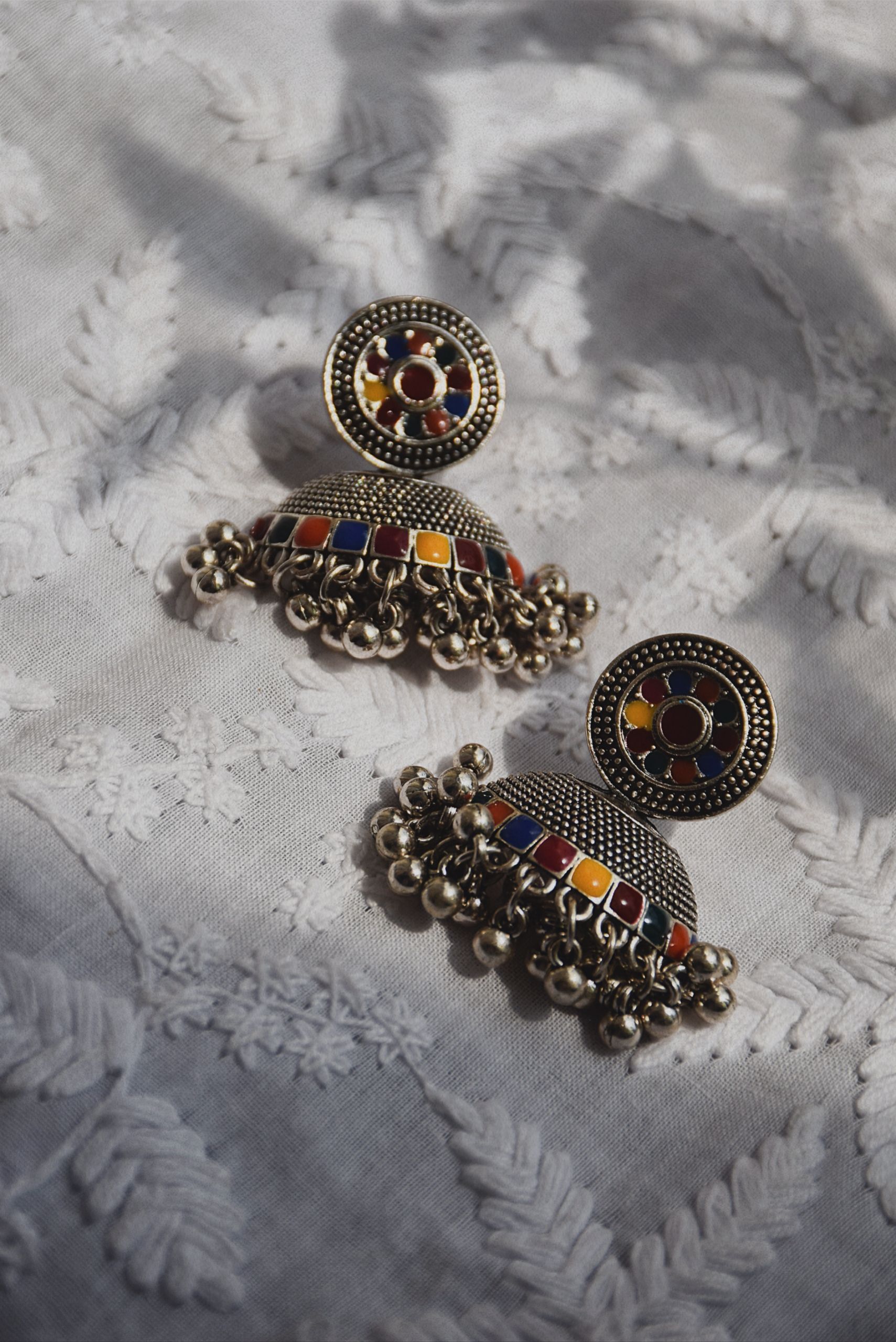
Every morning, I get ready for work and reach for a pair of earrings. The decision is rarely important, yet I still spend a few moments making it. A familiar pair, something slightly dramatic, something that works better with the day ahead than the one before. It is such an ordinary ritual that I rarely think about the act itself, or how easily I assume that adornment is mine to choose.
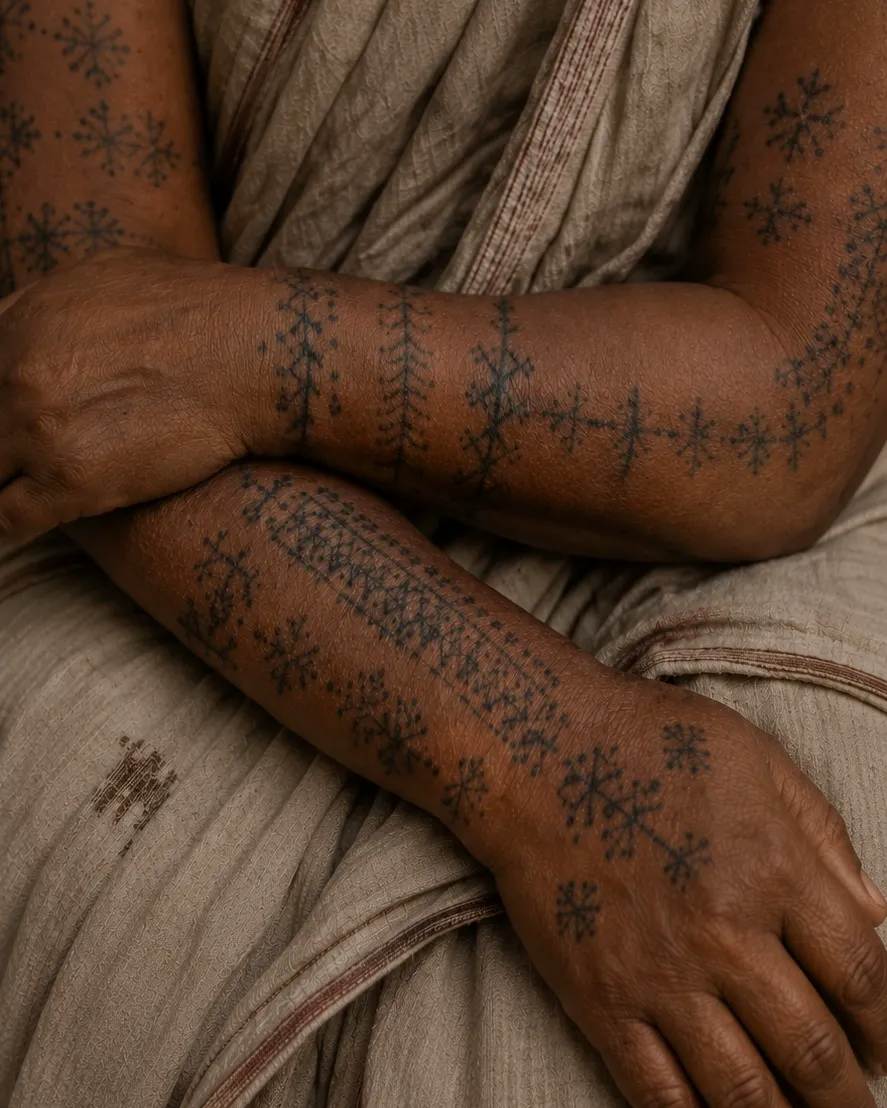
That assumption was what made Godna so interesting when I first came across it. For women in some marginalised and Adivasi communities, conventional jewellery was not always an ornament they could easily own or keep. It could be expensive, sold when money was needed, lost, inherited or taken away. Tattooing offered another form of adornment, one that could not be separated from the person wearing it.
Godna is a name used for traditional tattooing practices found across several communities in India, with particularly well documented traditions in central India and Chhattisgarh. The markings were made directly onto the skin, often by women tattooing other women, and their motifs and meanings differed between communities. Flowers, dots, lines, animals and geometric patterns could mark identity and belonging, accompany stages of life, carry religious significance or decorate the body. In some traditions, tattoos appeared where jewellery might otherwise have been worn. There were also beliefs that gave their permanence an even greater significance: jewellery would eventually be left behind, while Godna could accompany the wearer beyond death.
That relationship between limitation and adornment is the part that feels familiar to me as a designer. Architecture begins with things we cannot entirely choose: climate, available materials, structure, construction techniques and budgets. Yet some of the details we now associate most strongly with a place began as responses to exactly those conditions. Red oxide became part of the memory of a certain kind of South Indian home. Laterite gave buildings along the western coast a colour and texture tied to their landscape. Deep overhangs, screens and verandahs answered practical questions of rain, heat and ventilation while becoming part of the architectural language of those places.
I see the same thing at the scale of an individual project. A constraint can establish the language for an entire room. A material chosen for practical reasons can become the detail everyone remembers. The interesting part of designing around a limitation is rarely disguising it completely. Sometimes it is allowing that limitation to become part of what gives the space its identity.
Godna sits at a very different scale and belongs to histories far removed from the decisions I make on a building site, but I recognise the instinct behind transformation. A circumstance doesn't always remain a circumstance. People work on it, embellish it, repeat it and eventually make it recognisable as their own.
The markings of Godna made that response permanent.
Further Reading
- Borrowed Taste — How familiarity and context can change the way we see materials, objects and cultural forms.
- What Makes a Home? — A reflection on belonging, memory and the things we carry with us through changing places.
- What Fontainhas Taught Me About Goa — How constraints, local materials and necessity can become part of a place's design identity.