
Foundations of a Studio: Everything before the Photograph
Reflecting on one of Kyrah Design Studio's formative projects—a 5,000 sq ft villa celebrating the richness of traditional Indian craftsmanship.
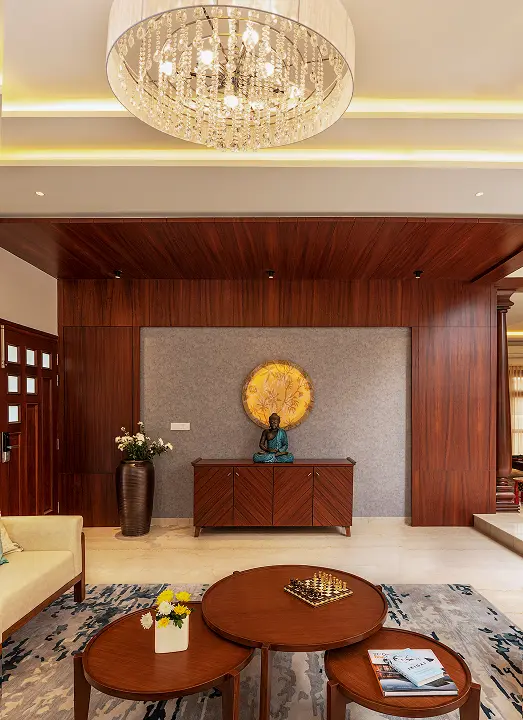
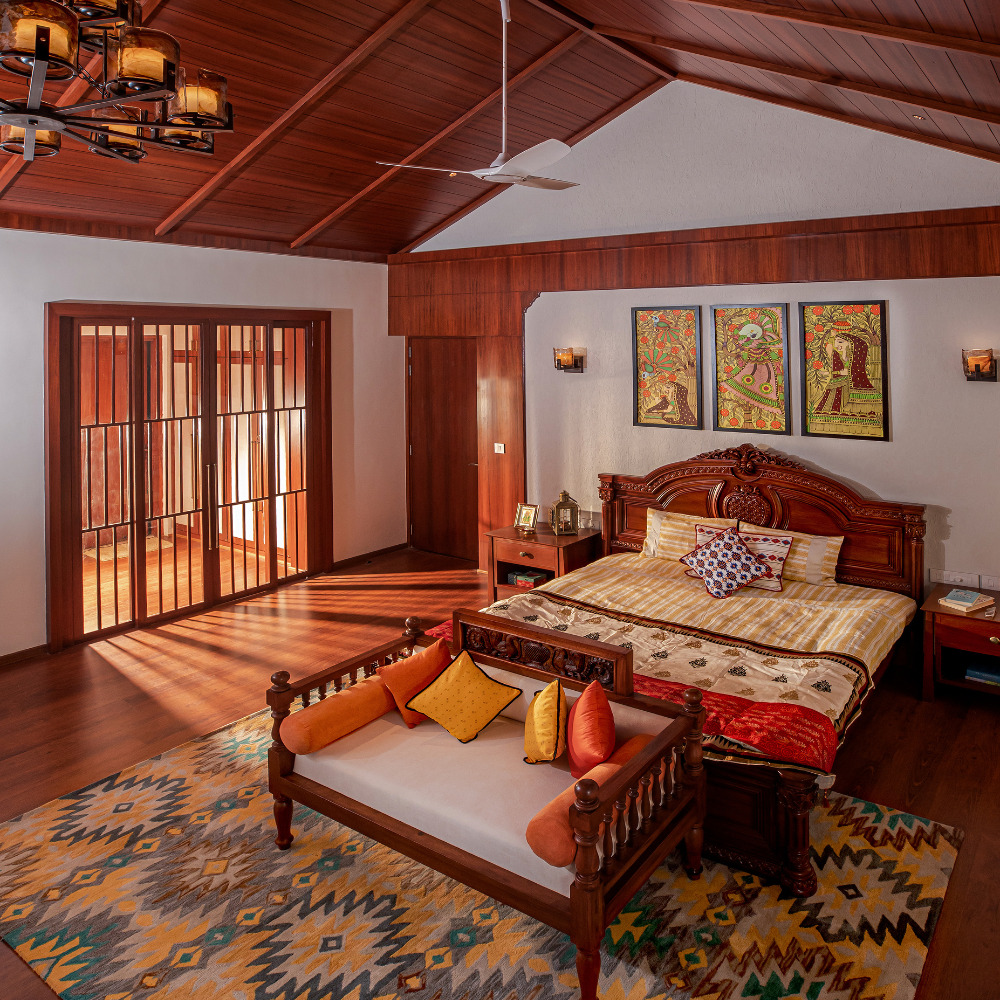
One of the most recognisable photographs from our portfolio is of a Buddha set against a softly lit backdrop. Whenever I see it, I remember standing on site a few hours before the shoot, stretching two layers of sheer fabric by hand to create the halo behind it. The finished image is calm, deliberate, effortless even. My memory of making it is something else entirely.
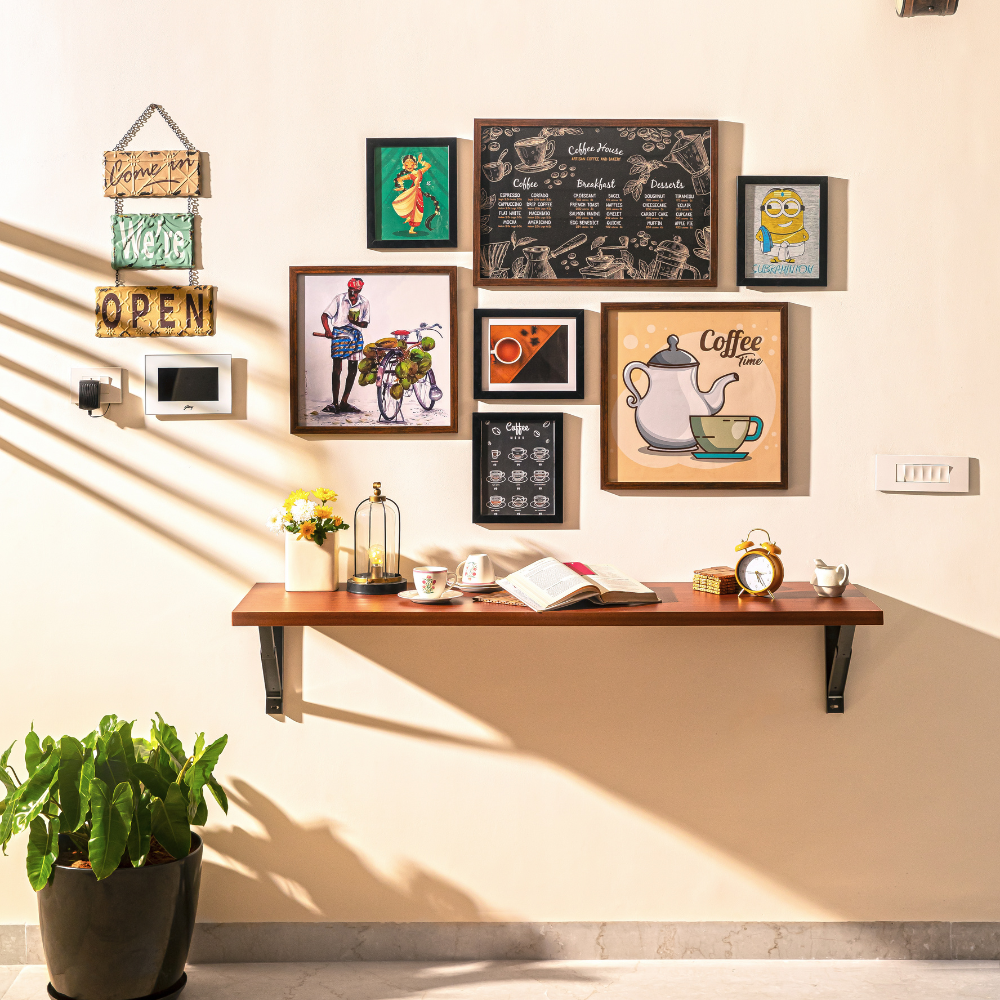
A surprising number of my memories from that project have very little to do with what eventually appeared in the photographs. I remember Kanishka, my business partner, carrying carpets that seemed determined to weigh more than either of us up and down several flights of stairs while we repeatedly moved them between rooms. I remember negotiating with a framer over every single frame that eventually made its way onto the coffee wall. I remember screeching the car to a halt after spotting the perfect Tanjore painting while we were driving across the city on an entirely unrelated errand. Years later, these memories arrive faster than the photographs themselves.
The project was completed through the Delta wave of COVID, when work had stopped almost entirely before beginning again slowly and painfully. People around us were falling ill. Conversations about oxygen cylinders and hospital beds had replaced conversations about site schedules. Teams were unavailable, decisions stalled and the business continued to bleed money while very little could actually move forward. When work eventually resumed, it did so cautiously. Things that should have taken days stretched into weeks, and completing a home felt considerably less important than many of the things happening around us at the time.
Eventually, though, the house was finished. There are photographs from it that people continue to save and share today, including the foyer, the living spaces and a chandelier suspended beneath a skylight. When I see that chandelier, I remember spending hours beneath the skylight in scorching heat, hungry, exhausted and increasingly dazed while we tried to get it installed correctly. The site was far enough outside the city then that Swiggy and Zomato didn't deliver there. We would leave home in the morning, get consumed by whatever was happening on site and realise embarrassingly late in the day that neither of us had eaten.
It also meant being two women repeatedly walking onto construction sites where we were often the only women in the room. In the early years, there were people who questioned our decisions, spoke past us or seemed surprised that we were the ones giving instructions. That changed gradually. We kept returning to site, answering questions, correcting work, making decisions and standing by them. After enough visits, the scepticism became less interesting to everyone involved. We were simply the architects on site, and there was work to be done.
In March 2025, the project received an award. By then, enough time had passed for the circumstances in which we had made it to feel almost like another life. A home that had been completed through stopped work, illness, financial uncertainty and an extraordinary amount of improvisation was now being encountered as a set of composed photographs on a screen. A completed home has a way of compressing years into a single image. The photograph presents the finished story. The experience of making it is usually slower, messier and considerably more human.
The Buddha is still there. The chandelier still hangs beneath the skylight, and the Tanjore painting still anchors the room. But the photographs have become a record of the house in a way that my memories never quite have. Mine are of carpets being dragged between rooms, fabric pulled taut behind a Buddha, afternoons spent hungry beneath a skylight and two women leaving site late at night in separate cabs, sometimes with another hour or two of Bangalore still between us and home. We would stay on the phone for those journeys, checking where the other had reached until we knew we were both safely back.
Years later, I can look at a perfectly composed photograph of that house and remember exactly what happened a few inches outside its frame.
Further Reading
- The Quiet Work of Design — A look at the details, craftsmanship and work that often remain invisible in the finished image.
- Designing for Time — How the life of a home continues to unfold long after the photographs and handover are complete.
- What I Took Back From the Kochi Biennale — A reflection on the difference between how spaces are designed and how people actually experience them.